
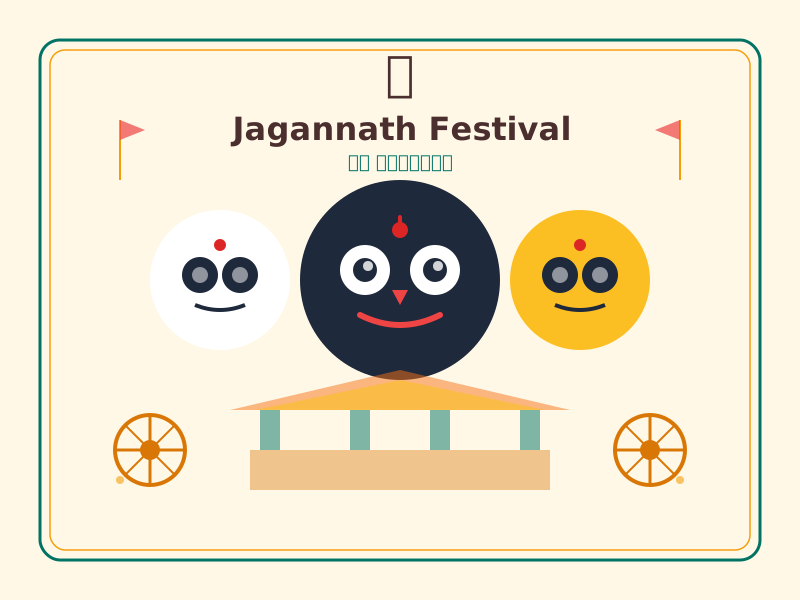
Rath Yatra 2026
The Grand Chariot Festival of Lord Jagannath — A Divine Journey from Temple to Gundicha
Auspicious Timings & Panchang
📍 Puri, Odisha
Rath Yatra Day Recommendations
Follow these sacred rituals to make the most of this auspicious day
Visit the Jagannath Temple or local ISKCON center for darshan
EssentialPull the chariot rope for divine blessings (equivalent to Ashvamedha Yagna)
EssentialChant Jagannath Ashtakam and Hare Krishna Mahamantra
RecommendedOffer Mahaprasad (Khichdi, Dalma) to the Lord
RecommendedPerform evening aarti with family
RecommendedThe Divine Story of Rath Yatra
Origin of the Chariot Festival
Rath Yatra traces its origins to ancient Puranic texts.
According to the Skanda Purana, Lord Jagannath expressed His desire to visit Gundicha Temple, the place where the sacred wooden idols were originally carved by the divine architect Vishwakarma.
This annual journey symbolizes the Lord's love for His devotees and His willingness to come out of the sanctum sanctorum so that all people, regardless of caste or creed, may have His divine darshan.
The Three Magnificent Chariots
Three grand chariots are built anew each year: Nandighosa (45 feet, 16 wheels) for Lord Jagannath, decorated in red and yellow; Taladhwaja (44 feet, 14 wheels) for Lord Balabhadra, adorned in red and blue; and Darpadalana (43 feet, 12 wheels) for Devi Subhadra, decorated in red and black. Fresh neem and other sacred woods are used, and the construction begins on Akshaya Tritiya.
The Sacred Procession
On the day of Rath Yatra, the deities are brought out in a grand procession called Pahandi.
The Gajapati King of Puri performs the Chhera Pahanra ritual, sweeping the chariots with a golden broom — symbolizing that before Lord Jagannath, even a king is a humble servant.
Millions of devotees then pull the massive chariots along the Bada Danda (Grand Road) toward Gundicha Temple, a journey of approximately 3 kilometers.
Spiritual Significance
The Rath Yatra symbolizes the journey of the soul toward the divine.
Pulling the chariot rope is said to be equivalent to performing the Ashvamedha Yagna and grants liberation (moksha).
The festival embodies the principle that God belongs to everyone — during Rath Yatra, the Lord leaves the exclusive sanctum to bless all beings equally, transcending barriers of caste, creed, and social status.
The Nine-Day Festival Cycle
Rath Yatra is not a single-day event but a nine-day cycle. The deities stay at Gundicha Temple for seven days, during which special rituals are performed.
On the ninth day (Bahuda Yatra), the chariots return to the Jagannath Temple.
The complete cycle includes Hera Panchami (when Goddess Lakshmi visits), Suna Besha (golden adornment), and culminates in Niladri Bije (the deities' return to the sanctum).
घटनाक्रम
Puranic Origins
Establishes the scriptural basis for the festival
Temple Construction
The festival gained its current grand form
Chaitanya Mahaprabhu
Global spread of Jagannath consciousness
Puja Vidhi - Rath Yatra 2026
The puja for Rath Yatra 2026 is a sacred ritual that offers us an opportunity to establish a deep connection with divinity. This method is inspired by centuries-old traditions and is performed with devotion, reverence, and the spirit of surrender.
This comprehensive puja guide contains 5 essential steps that can be completed in approximately 45-60 minutes. Each step is explained with clarity and devotion to help you connect with the divine presence of Lord Krishna.
🛁 1. Purification
Take an early morning bath and wear clean clothes. Set up a clean puja space facing east with an image or murti of Lord Jagannath.
Required Materials: Clean clothes, Jagannath image or murti
- Yellow or white clothes are preferred
🪔 2. Light the Diya
Light a ghee lamp and incense sticks before Lord Jagannath. Place fresh flowers, especially marigolds and lotuses.
Required Materials: Ghee diya, Incense, Fresh flowers
- Use cow ghee for the lamp
📿 3. Chant Mantras
Chant the Jagannath Ashtakam or 'Jagannath Swami Nayana Patha Gami Bhavatu Me' mantra 108 times using a tulsi mala.
Required Materials: Tulsi mala, Mantra text
- Focus on the divine form of Lord Jagannath while chanting
🍚 4. Offer Bhog
Offer Mahaprasad items — Khichdi, Dalma (lentils with vegetables), and sweets to Lord Jagannath.
Required Materials: Khichdi, Dalma, Sweets
- Cook without onion and garlic
🙏 5. Aarti and Prayer
Perform aarti with the camphor lamp, circumambulate the deity, and pray for blessings. Distribute prasad to family members.
Required Materials: Camphor, Aarti plate
- Sing 'Jay Jagannath' during aarti
The most important aspect of puja is your devotion and faith. Whether you follow each step in detail or adapt it to your circumstances, purity of mind and the spirit of surrender are the foundation of true worship. May Lord Krishna bless you with divine love and eternal peace. Om Shanti Shanti Shanti.
🛍️ Puja Samagri Checklist
Prepare these items for a complete puja
✅ Essential Items
⭐ Optional Items
Frequently Asked Questions (FAQs)
Pulling the chariot rope during Rath Yatra is considered equivalent to performing the Ashvamedha Yagna. It is believed to grant liberation (moksha) and wash away sins. The act symbolizes devotees carrying the Lord in their hearts.
Rath Yatra 2026 falls on Thursday, July 16, 2026 (Ashadha Shukla Dwitiya). The chariot procession begins around 11:00 AM IST after the Pahandi and Chhera Pahanra rituals.
Yes, Rath Yatra is unique because it is open to all people regardless of caste, creed, religion, or nationality. This is why the festival symbolizes equality before God — everyone can pull the chariot and receive darshan of Lord Jagannath.
The chariots are rebuilt annually using fresh neem wood (daru) as a symbol of renewal and the impermanence of material existence. The construction begins on Akshaya Tritiya and involves over 1,400 traditional carpenters following ancient designs.
Chhera Pahanra is the sweeping ritual performed by the Gajapati (King of Puri) on the chariots with a golden-handled broom. It signifies that before Lord Jagannath, even the mightiest king is a humble servant, establishing the principle of divine equality.
Strict fasting is not traditionally mandatory on Rath Yatra. The emphasis is on devotion, darshan, and participating in the procession. However, consuming sattvic (pure vegetarian) food without onion and garlic is recommended. Mahaprasad from the temple is considered highly sacred.
The procession covers approximately 3 kilometers along Bada Danda (Grand Road) in Puri, from the Jagannath Temple to the Gundicha Temple. The deities stay at Gundicha for seven days before returning on Bahuda Yatra.
You can celebrate at home by setting up Lord Jagannath's murti, performing puja with the Jagannath Ashtakam, offering Mahaprasad (Khichdi and Dalma), decorating a small chariot, and watching the live broadcast from Puri. Many ISKCON temples worldwide also organize local Rath Yatra processions.
🔔 Get Festival Reminders
Subscribe to receive timely reminders for Rath Yatra and other Jagannath festivals.