
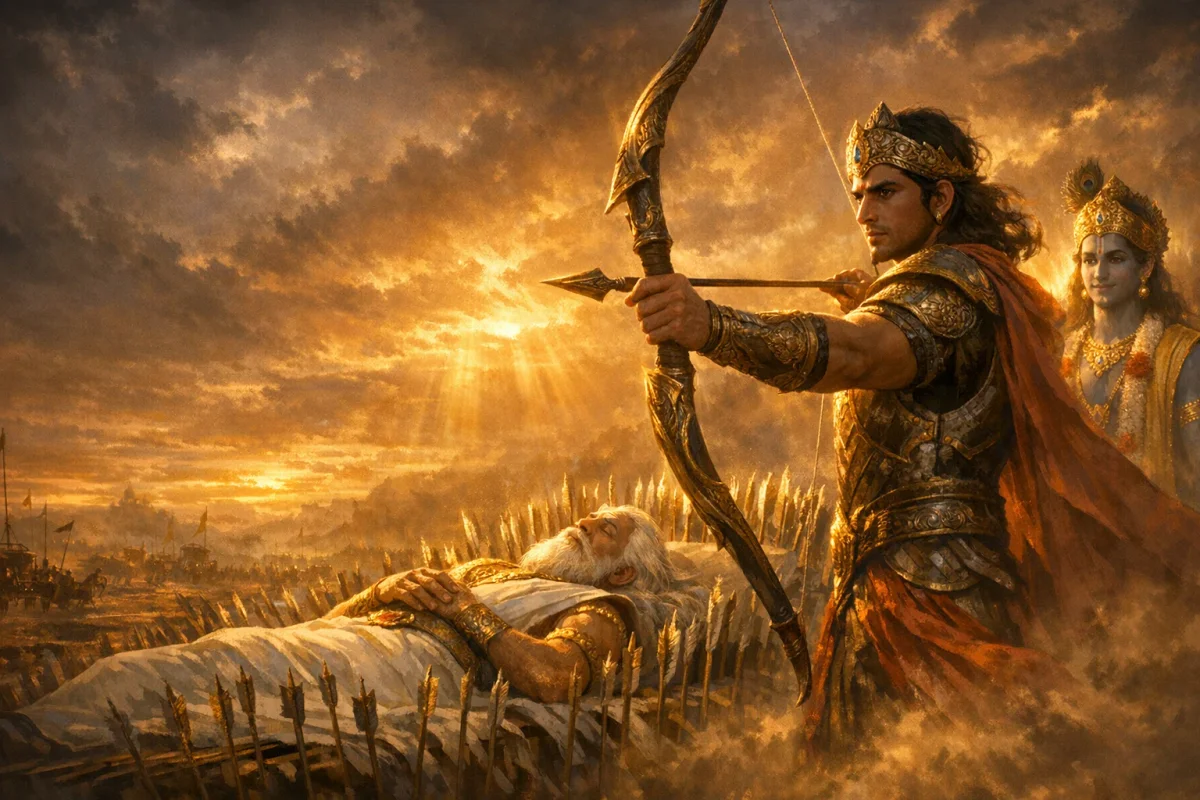
On the sacred battlefield of Kurukshetra, the clashing of swords and the cries of warriors painted a scene of epic proportions. As the sun cast its golden glow over the bloodied earth, the mighty Bhishma, a paragon of valor, stood as an indomitable force. Yet, amid this chaos, a divine strategy was unfolding, led by none other than Krishna, the charioteer of Arjuna. The stage was set for a battle that would echo through the ages, where even the invincible must fall.
The Story
On the sacred battlefield of Kurukshetra, the clashing of swords and the cries of warriors painted a scene of epic proportions. As the sun cast its golden glow over the bloodied earth, the mighty Bhishma, a paragon of valor, stood as an indomitable force. Yet, amid this chaos, a divine strategy was unfolding, led by none other than Krishna, the charioteer of Arjuna. The stage was set for a battle that would echo through the ages, where even the invincible must fall.
The eleventh day of the great Kurukshetra war dawned with an ominous tension. Bhishma, the grand patriarch of the Kuru dynasty, was a formidable presence on the battlefield. With the Pandavas facing imminent defeat, Arjuna, guided by Krishna, was charged with a daunting task. The skies were thick with arrows, and the earth trembled under the weight of clashing warriors. Through Krishna's strategic guidance, Arjuna aimed his arrows with precision, each strike a testament to divine intervention.
The air was filled with the clang of weapons, the roar of battle cries, and the palpable tension of destiny unfolding.
As Arjuna prepared to face Bhishma, a storm raged within him. Torn between his duty as a warrior and his respect for the elder he revered, his heart was heavy. Krishna, sensing Arjuna's turmoil, reminded him of his dharma. The chariot wheels rumbled forward, carrying the weight of Arjuna's resolve.
Arjuna grappled with guilt and duty, questioning his place in this cosmic play orchestrated by fate.
In a moment of profound realization, Krishna revealed the greater purpose of the battle. He imparted wisdom upon Arjuna, illuminating the path with divine clarity. With Krishna's presence felt in every heartbeat, Arjuna's arrows, guided by unwavering resolve, pierced through Bhishma's defenses.
Krishna's guidance transcended mere strategy, infusing Arjuna with the strength of divine purpose.
As Bhishma fell, resting upon a bed of arrows, the battlefield transformed. The fall of the grand elder marked a pivotal shift in the war. The Pandavas gained renewed hope, while the Kauravas were struck with despair. Bhishma, even in his final moments, extolled the glory of Krishna, acknowledging the divine orchestration of events.
The spiritual and political dynamics of the war shifted, emphasizing the power of dharma and divine will.
In his last breaths, Bhishma imparted wisdom to Yudhishthira and the Pandavas, ensuring the continuation of dharma. Through Krishna's guidance, the cosmic balance was restored. Bhishma's fall was not just a defeat, but a testament to the eternal truth that even the greatest must yield to the divine plan.
Bhishma's transformation from warrior to sage underscored the ultimate surrender to divine will.
In today's world, the story of Bhishma's fall serves as a reminder of the power of divine guidance and the importance of adhering to one's duty. Just as Arjuna found strength through Krishna, so too can we find clarity in moments of doubt by seeking higher wisdom. The legacy of Kurukshetra endures, teaching us that the path of righteousness, though challenging, is illuminated by divine light.
Dharma, guided by divine wisdom, leads to the ultimate fulfillment of one's purpose.
Bhagavad Gita Verse
2.47कर्मण्येवाधिकारस्ते मा फलेषु कदाचन। मा कर्मफलहेतुर्भूर्मा ते सङ्गोऽस्त्वकर्मणि
“Your right is only to work, but not to its results; do not let the results of action be your motive, nor let your attachment be to inaction.”
Moral of the Story
The story of Bhishma's fall on the bed of arrows teaches us the importance of duty, sacrifice, and the complexity of moral choices. It reminds us that sometimes, standing by one's principles can lead to personal suffering, yet it is essential for the greater good.
How to Apply This Story in Real Life
Embrace your responsibilities even when faced with difficult choices.
Reflect on the moral implications of your decisions in personal and professional life.
Recognize the value of sacrifice for the welfare of others in your community.
Why This Story Matters
This story is relevant today as it highlights the conflicts between personal desires and societal responsibilities. In a world where we often face ethical dilemmas and must make difficult choices, Bhishma's unwavering commitment to his vows serves as a reminder of the strength required to uphold our values amidst adversity.
Frequently Asked Questions (FAQs)
Bhishma is a key character in the Mahabharata, known for his vow of celibacy and his role as a great warrior.
The 'bed of arrows' symbolizes the culmination of Bhishma's sacrifices and the inevitability of fate in the face of duty.
Bhishma's story relates to modern life by illustrating the challenges of balancing personal convictions with societal expectations.

Suggested Books & Puja Items


This story is part of our curated collection designed to help readers navigate emotional and life challenges through meaningful storytelling rooted in the timeless wisdom of Lord Jagannath.