
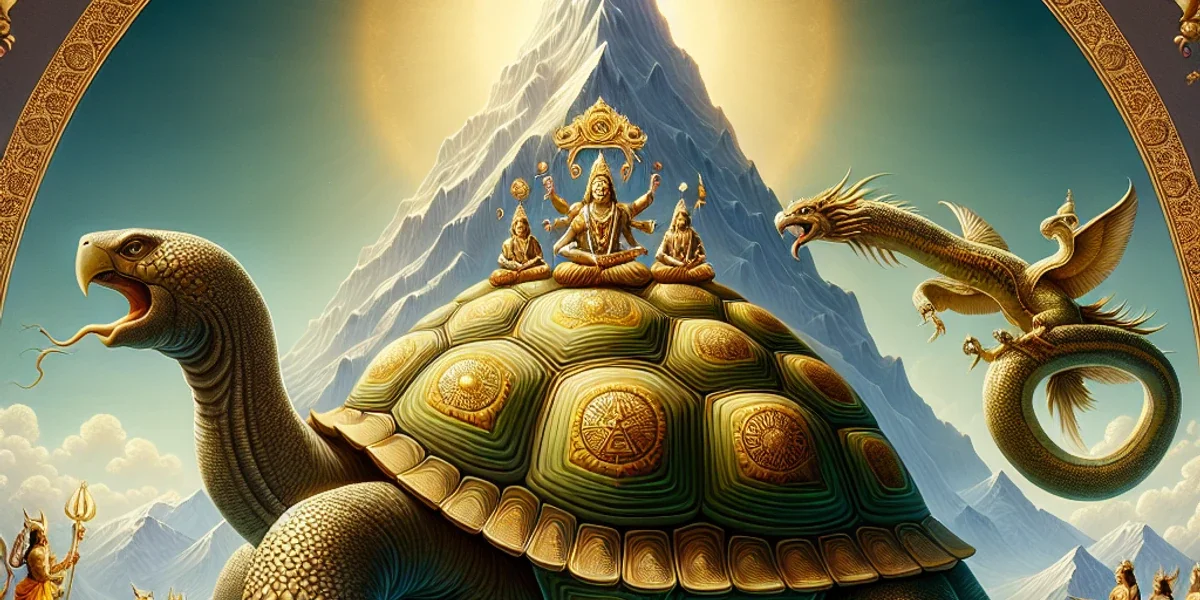
The Devas and Asuras engage in the churning of the ocean, seeking Amrita, the nectar of immortality. Lord Vishnu, in his Kurma avatar, supports Mount Mandara as the churning rod, as described in the Srimad Bhagavatam.
The Story
The churning of the ocean, known as Samudra Manthan, is a pivotal event described in the Srimad Bhagavatam. This cosmic endeavor, initiated by the Devas and Asuras, aimed to extract the nectar of immortality, Amrita, from the depths of the ocean. To facilitate this monumental task, Lord Vishnu, in the form of the Kurma avatar, took his place beneath Mount Mandara, which served as the churning rod, while the serpent Vasuki coiled around it, acting as the churning rope.
As the churning commenced, the ocean roiled, and the forces of both the Devas and Asuras struggled against each other. The tension of their rivalry filled the atmosphere as they pulled and pushed, striving for dominance over the treasures that lay hidden beneath the ocean's surface. With each turn, the mountain trembled, and the ocean's depths churned violently. The Devas, led by Indra, faced fierce resistance from the Asuras, who were equally determined to seize the Amrita.
As described in the Vishnu Purana, the churning produced not only Amrita but also fourteen extraordinary treasures. Among them were the divine cow Kamadhenu, the celestial horse Uchhaishravas, and the unprecedented gem Kaustubha. However, the process was fraught with peril. The Asuras, powered by their greed, attempted to claim the Amrita for themselves, while the Devas, relying on divine guidance, sought to secure it for the preservation of dharma.
As the churning intensified, a crisis emerged when a deadly poison, known as Kalakuta, rose from the ocean's depths. It threatened to engulf all beings, creating a moment of desperation. The Devas and Asuras, paralyzed by fear of the impending doom, sought refuge from Lord Vishnu. They turned to him, knowing he alone could save them from this calamity. In this moment of apparent defeat, Vishnu, embodying compassion and wisdom, instructed the Devas to seek the goddess Durga, the embodiment of divine power.
Durga, moved by their prayers, appeared and consumed the poison, saving all of creation from destruction. Her heroic act restored balance, allowing the churning to continue. With the danger averted, the Devas and Asuras resumed their efforts, and soon the Amrita emerged from the ocean, shimmering like a beacon of hope.
The Devas, filled with joy, gathered around the nectar, ready to partake. However, the Asuras, emboldened by their earlier success, attempted to seize the Amrita as well. Yet, Lord Vishnu took on the form of the enchanting Mohini, a divine enchantress. Captivated by her beauty, the Asuras were rendered powerless, entranced and unable to act. In this clever ruse, Vishnu ensured that the Devas received the Amrita, restoring order to the cosmos.
The sacred Gita teaches us:
अननà¥à¤¯à¤¾à¤¶à¥à¤šà¤¿à¤¨à¥à¤¤à¤¯à¤¨à¥à¤¤à¥‹ मां ये जनाः परà¥à¤¯à¥à¤ªà¤¾à¤¸à¤¤à¥‡à¥¤ तेषां नितà¥à¤¯à¤¾à¤à¤¿à¤¯à¥à¤•à¥à¤¤à¤¾à¤¨à¤¾à¤‚ योगकà¥à¤·à¥‡à¤®à¤‚ वहामà¥à¤¯à¤¹à¤®à¥
"For those men who worship Me alone, thinking of no one else, for those ever-united, I secure what they have not already possessed and preserve what they already possess."
As narrated in the Srimad Bhagavatam, the emergence of Amrita and the subsequent events underscore the significance of divine intervention in times of crisis. The episode illustrates that true strength lies not merely in physical power but in wisdom and devotion. The Devas, who initially faltered, regained their resolve through faith in Vishnu's guidance. Their united effort, coupled with divine assistance, ultimately led to their victory and the preservation of cosmic order.
This narrative highlights the importance of seeking divine help during tumultuous times. The act of churning the ocean symbolizes the struggle inherent in life, where material desires often cloud judgment. However, it is through devotion and surrender to the divine that one can navigate challenges and emerge victorious. The story serves as a reminder that even amid chaos, faith and the willingness to turn to God can lead to miraculous outcomes and the restoration of balance in the universe.
The Samudra Manthan, therefore, is not merely a tale of gods and demons; it is a profound lesson in collaboration, faith, and the unyielding power of divine grace that sustains and uplifts all beings.
--- Scriptural Sources: Srimad Bhagavatam (primary source) Vishnu Purana ---
Bhagavad Gita Verse
Bhagavad Gita 9.22अननà¥à¤¯à¤¾à¤¶à¥à¤šà¤¿à¤¨à¥à¤¤à¤¯à¤¨à¥à¤¤à¥‹ मां ये जनाः परà¥à¤¯à¥à¤ªà¤¾à¤¸à¤¤à¥‡à¥¤ तेषां नितà¥à¤¯à¤¾à¤à¤¿à¤¯à¥à¤•à¥à¤¤à¤¾à¤¨à¤¾à¤‚ योगकà¥à¤·à¥‡à¤®à¤‚ वहामà¥à¤¯à¤¹à¤®à¥
“For those men who worship Me alone, thinking of no one else, for those ever-united, I secure what they have not already possessed and preserve what they already possess.”
Moral of the Story
Faith protects devotees in times of crisis. Divine guidance ensures victory over adversity. Surrendering to the Supreme Lord fosters resilience.
How to Apply This Story in Real Life
Light a lamp before Lord Vishnu's image each morning. Offer fresh tulsi leaves and water. Chant Om Namo Narayanaya 108 times, counting on beads. This daily practice strengthens devotion and creates a sacred rhythm in your day.
Maintain daily prayers even when results aren't visible, recalling the Devas' faith during the churning. When doubts arise in your sadhana, remember their reliance on Vishnu. Serve others selflessly, viewing each act as service to the Lord.
Why This Story Matters
Divine intervention occurs in times of crisis, demonstrating the importance of seeking help from the Supreme Lord. Faith in the Lord's guidance sustains devotees through challenges. The narrative encourages reliance on divine assistance during struggles, as surrender leads to protection and restoration.
Frequently Asked Questions (FAQs)
Lord Vishnu instructed the Devas to seek the goddess Durga when the deadly poison emerged. Durga consumed the poison, saving all beings and allowing the churning to continue.
The Srimad Bhagavatam and Vishnu Purana provide detailed accounts of the churning of the ocean, the emergence of Amrita, and the roles played by the Devas and Asuras.
The churning represents life's struggles where material desires can cloud judgment. Devotees learn that through surrender to the divine, they can navigate challenges and achieve balance.

Suggested Books & Puja Items


This story is part of our curated collection designed to help readers navigate emotional and life challenges through meaningful storytelling rooted in the timeless wisdom of Lord Jagannath.