
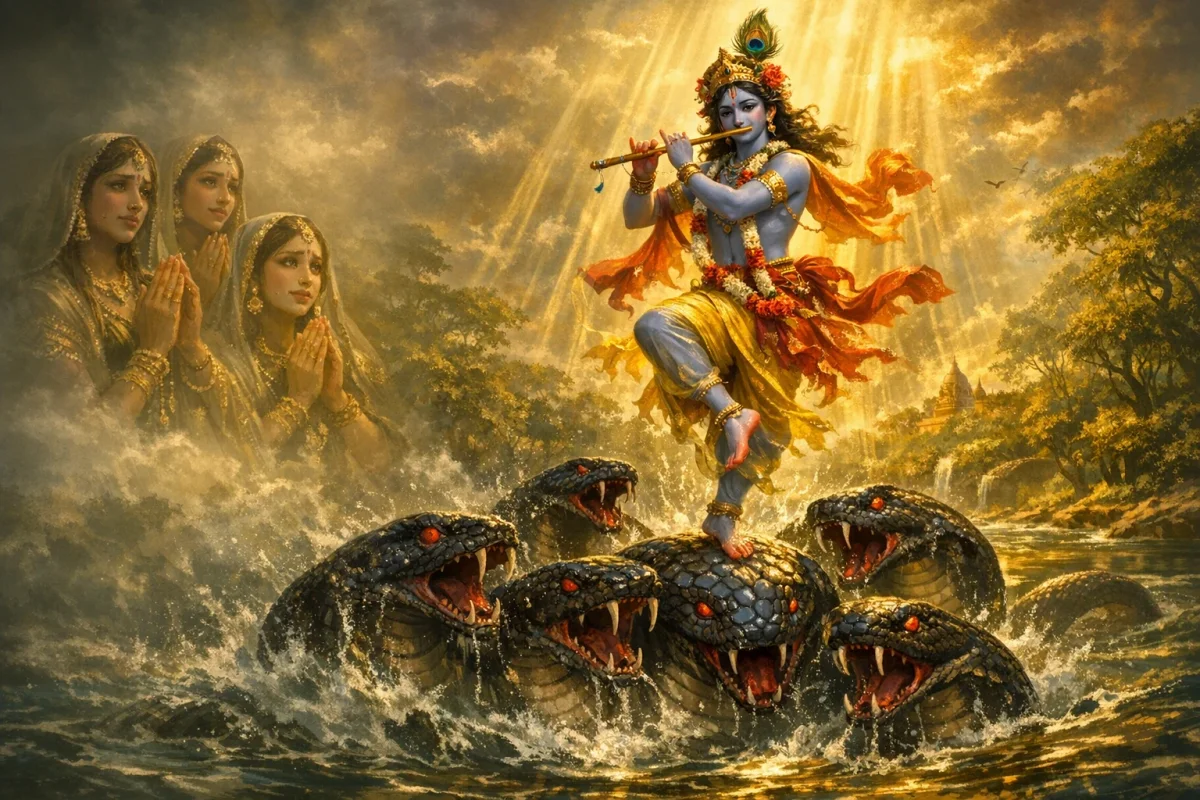
In the heart of Vrindavan, where the sacred Yamuna River flowed, a shadow loomed over the peaceful hamlet. The once-lush banks were now ravaged by the venomous presence of Kaliya, a formidable serpent whose poison tainted the waters. The villagers lived in constant fear, their joyous laughter replaced by anxious whispers. But hope remained, for in this timeless land, the divine child Krishna resided, his heart full of compassion and his eyes set on restoring peace.
The Story
In the heart of Vrindavan, where the sacred Yamuna River flowed, a shadow loomed over the peaceful hamlet. The once-lush banks were now ravaged by the venomous presence of Kaliya, a formidable serpent whose poison tainted the waters. The villagers lived in constant fear, their joyous laughter replaced by anxious whispers. But hope remained, for in this timeless land, the divine child Krishna resided, his heart full of compassion and his eyes set on restoring peace.
The banks of the Yamuna were shrouded in a foreboding mist, the once-clear waters now swirling with a sinister black hue. Birds fell silent as the great serpent Kaliya emerged, his many hoods rising ominously above the river. The air was thick with tension, charged with the fear of the villagers who dared not venture near. Yet, amidst this scene of despair, the youthful Krishna stood unfazed, his radiant form a beacon of hope. With a determined leap, he landed upon Kaliya's heads, transforming the serpent's thrashing into a divine dance.
The ominous hiss of the serpent, the chilling ripple of the poisoned waters, and the rhythmic sound of Krishna's divine steps created a mesmerizing symphony.
As Krishna danced, the serpent writhed in pain, his once-invincible might crumbling beneath the divine being's feet. Kaliya's inner turmoil was palpable; he was torn between his inherent malice and the awe-inspiring purity of Krishna's presence. The wives of Kaliya, witnessing the battle from the riverbank, were engulfed in despair. They beseeched Krishna with folded hands, their hearts heavy with the fear of losing their consort.
Kaliya's struggle was not just physical but spiritual; his arrogance clashed with the realization of his own limitations before the divine.
In a moment of divine intervention, Krishna paused his celestial dance, acknowledging the heartfelt prayers of Kaliya's wives. Their devotion pierced through the veil of malice that shrouded Kaliya's heart. A divine light enveloped the scene, and in that sacred moment, Kaliya was granted a chance for redemption. Krishna's compassionate gaze bestowed upon the serpent a chance to live, purified and humbled.
A radiant aura emanated from Krishna, bathing the turbulent waters in a serene glow, signaling the restoration of cosmic order.
With Kaliya's departure, the Yamuna's waters gradually cleared, and the vibrant life of Vrindavan was restored. The villagers rejoiced, their faith in divine justice reaffirmed. Spiritually, Kaliya's transformation symbolized the victory of righteousness over evil, a testament to Krishna's boundless mercy. The tale of Krishna's conquest spread far and wide, reinforcing the belief in divine protection and the triumph of good over evil.
The event not only brought peace back to Vrindavan but also strengthened the spiritual resolve of its people, inspiring generations with its message of hope and redemption.
As order returned to Vrindavan, the air was filled with joyous celebrations. Krishna, the divine protector, had once again restored harmony. Kaliya, now a symbol of reformed malice, swam away into the depths, his heart touched by the divine intervention. The realization dawned upon him and the villagers alike: true strength lies in humility and surrender to the divine will.
Even the darkest of hearts can be transformed by the light of divine grace.
The story of Krishna and Kaliya offers a profound lesson for contemporary times. Just as Krishna purified the Yamuna and transformed Kaliya, we are reminded that no challenge is insurmountable when faced with courage and faith. In a world often clouded by negativity, Krishna's dance upon Kaliya's heads teaches us the power of love and compassion.
Even those who stray can find redemption through sincere devotion and divine grace.
Bhagavad Gita Verse
2.14मात्रास्पर्शास्तु कौन्तेय शीतोष्णसुखदुःखदाः। आगमापायिनोऽनित्यास्तांस्तितिक्षस्व भारत
“The contact of the senses with the objects, O son of Kunti, which causes heat and cold, pleasure and pain, has a beginning and an end; they are impermanent; endure them bravely, O Arjuna.”
Moral of the Story
The story of Krishna subduing the serpent Kaliya teaches us about the importance of courage and righteousness in the face of overwhelming challenges. It shows that good can triumph over evil through devotion and faith. By standing up against negativity, we can restore harmony and peace in our lives and surroundings.
How to Apply This Story in Real Life
Practice courage in difficult situations and stand up for what is right.
Cultivate a supportive community to help overcome personal challenges.
Embrace the power of devotion and faith to navigate life's adversities.
Why This Story Matters
This story resonates with contemporary struggles against toxic environments, whether in personal relationships or societal issues. Just as Krishna confronted Kaliya to protect the inhabitants of Vrindavan, we too must confront our own 'Kaliya'—the negativity and adversity in our lives—to create a safe and nurturing space for ourselves and others. It inspires us to embrace our inner strength and act with integrity.
Frequently Asked Questions (FAQs)
Kaliya is a multi-headed serpent who terrorized the waters of Vrindavan, poisoning them and causing harm to the inhabitants.
Krishna jumps into the river, dances on Kaliya's hoods, and eventually subdues him, teaching him humility and restoring peace.
Krishna's dance symbolizes the victory of good over evil and the idea that through love and devotion, one can transform even the most negative forces.

Suggested Books & Puja Items


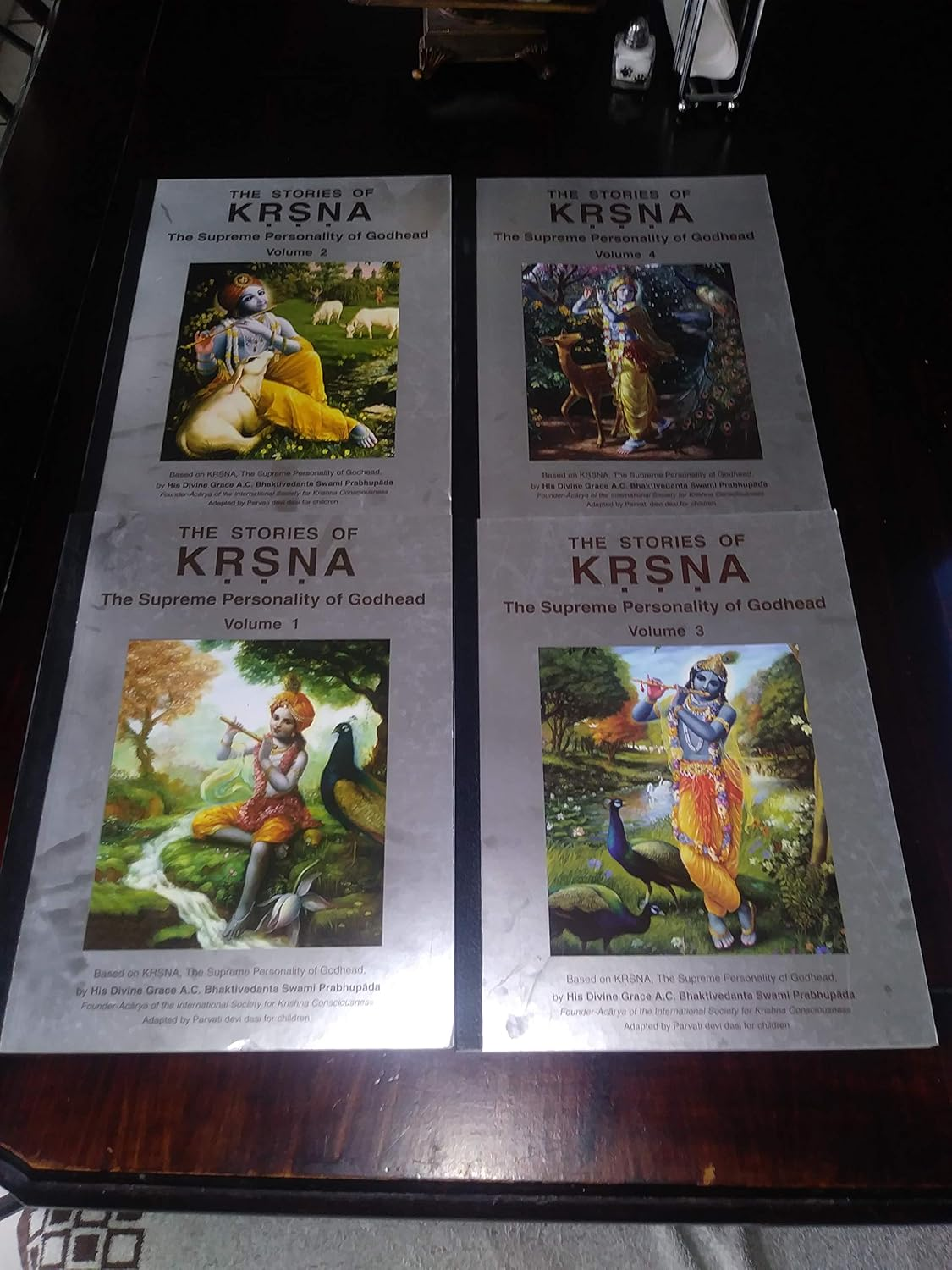
This story is part of our curated collection designed to help readers navigate emotional and life challenges through meaningful storytelling rooted in the timeless wisdom of Lord Jagannath.