
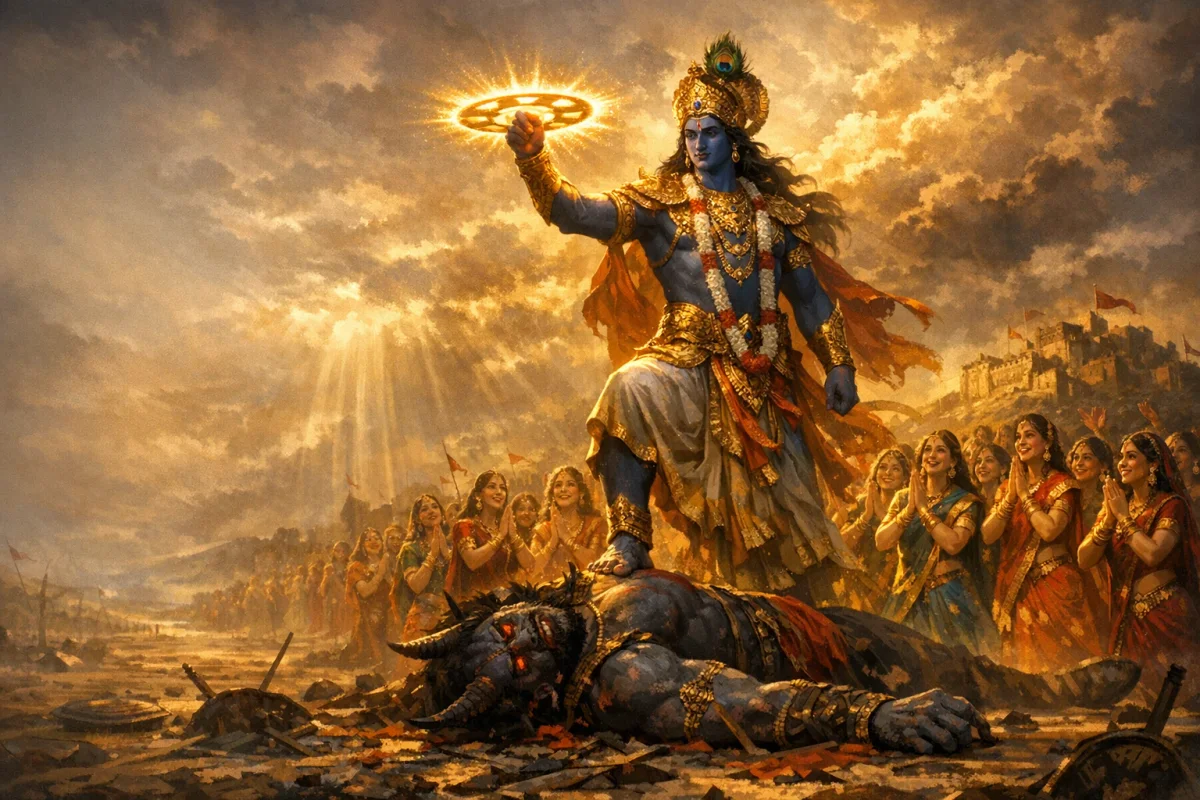
In the celestial tales of the Srimad Bhagavatam, an epic unfolds where the forces of darkness dare to challenge the divine. This is the saga of Narakasura, a demon whose reign of terror held thousands captive in despair. But as shadows thickened, a divine light emerged—Lord Krishna, the eternal savior, arrived to restore dharma. The skies roared with anticipation, as a battle between good and evil beckoned.
The Story
In the celestial tales of the Srimad Bhagavatam, an epic unfolds where the forces of darkness dare to challenge the divine. This is the saga of Narakasura, a demon whose reign of terror held thousands captive in despair. But as shadows thickened, a divine light emerged—Lord Krishna, the eternal savior, arrived to restore dharma. The skies roared with anticipation, as a battle between good and evil beckoned.
Narakasura, intoxicated with power, had imprisoned 16,000 princesses in his formidable fortress, casting a long shadow of fear across the realms. His arrogance knew no bounds as he amassed wealth and power, defying the very order of righteousness. The cries of the captive princesses echoed through the corridors of his dark citadel, a stark reminder of his tyranny.
As the sun dipped below the horizon, the fortress took on an eerie glow, its walls reverberating with the lamentations of the imprisoned. The air was thick with despair, yet a whisper of hope lingered—a hope that Krishna, the divine protector, would heed their silent prayers.
The battle raged in the shadow of Narakasura's impregnable fortress. Krishna, riding his celestial chariot with Satyabhama by his side, confronted the demon with unparalleled valor. The clash of weapons resonated like thunder, as Krishna's Sudarshan Chakra whirled through the air, a beacon of divine justice.
In the midst of battle, Krishna's heart was stirred by the plight of the princesses. Their suffering was a weight upon his soul, igniting a fierce resolve to end Narakasura’s reign. Yet, amidst the chaos, there was a pause—a moment where Krishna pondered the implications of his actions, the human cost of divine intervention.
As the battle reached its crescendo, Satyabhama, embodying divine feminine strength, took her place beside Krishna. It was her arrow, guided by Krishna's blessings, that pierced Narakasura, bringing the tyrant to his knees. In that moment, the heavens rejoiced, and the earth sighed in relief.
The skies parted to reveal a celestial vision, where the Devas showered flowers upon Krishna and Satyabhama. This divine endorsement signified not just a victory over evil, but the reestablishment of cosmic balance.
With Narakasura’s fall, the fortress gates swung open, releasing the princesses from their chains. Their liberation was not just physical; it was the restoration of their dignity and spirit. The kingdom, once under the shadow of darkness, now basked in the light of righteousness.
Politically, the defeat of Narakasura strengthened alliances among kingdoms, as rulers united under the banner of dharma. Spiritually, it was a reminder of the eternal battle between light and darkness, where divine intervention restores harmony.
As the dust of battle settled, Krishna stood amidst the liberated princesses, offering them a choice—a chance to return to their families or embrace a new life. Many chose to stay, seeing in him not just a savior, but a symbol of hope and renewal.
Krishna’s heart swelled with compassion, realizing that true victory lay not in conquest, but in the restoration of hope and dharma.
In the story of Narakasura’s fall, we find a timeless lesson: that darkness, no matter how overpowering, will always succumb to the light of righteousness. In today’s world, where challenges abound, we are reminded that courage and faith can triumph over adversity.
Even the mightiest fall when faced with truth. True power lies in compassion and justice. Victory is hollow without restoring hope.
Bhagavad Gita Verse
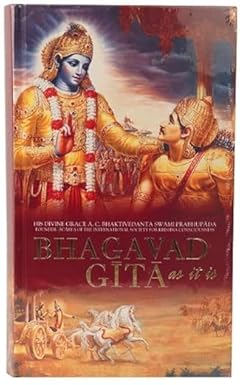
2.19य एनं वेत्ति हन्तारं यश्चैनं मन्यते हतम्। उभौ तौ न विजानीतो नायं हन्ति न हन्यते
“He who takes the Self to be the slayer and he who thinks it is slain, neither of them knows. It does not slay, nor is it slain.”
Moral of the Story
The story of Narakasura's fall teaches us the importance of courage and righteousness in the face of tyranny. It emphasizes that true strength lies in protecting the weak and standing up against injustice. By championing the cause of the oppressed, we can inspire hope and bring about positive change in our world.
How to Apply This Story in Real Life
Stand up against bullying or injustice in your community.
Support initiatives that empower marginalized groups.
Promote values of courage and integrity in your personal and professional life.
Why This Story Matters
This story resonates today as it highlights the ongoing struggle against oppression and the fight for justice. In a world where many still face injustice and discrimination, the themes of bravery and liberation empower us to take a stand against such challenges. It reminds us that collective action and moral integrity can lead to significant societal transformation.
Frequently Asked Questions (FAQs)
Narakasura is a demon king in Hindu mythology known for his tyranny and oppression of innocent people.
The liberation of the 16,000 princesses symbolizes the triumph of good over evil and the restoration of dignity and freedom to those who have been wronged.
Lord Jagannath is believed to have played a vital role in the defeat of Narakasura, showcasing His power and benevolence in protecting the oppressed.

Suggested Books & Puja Items

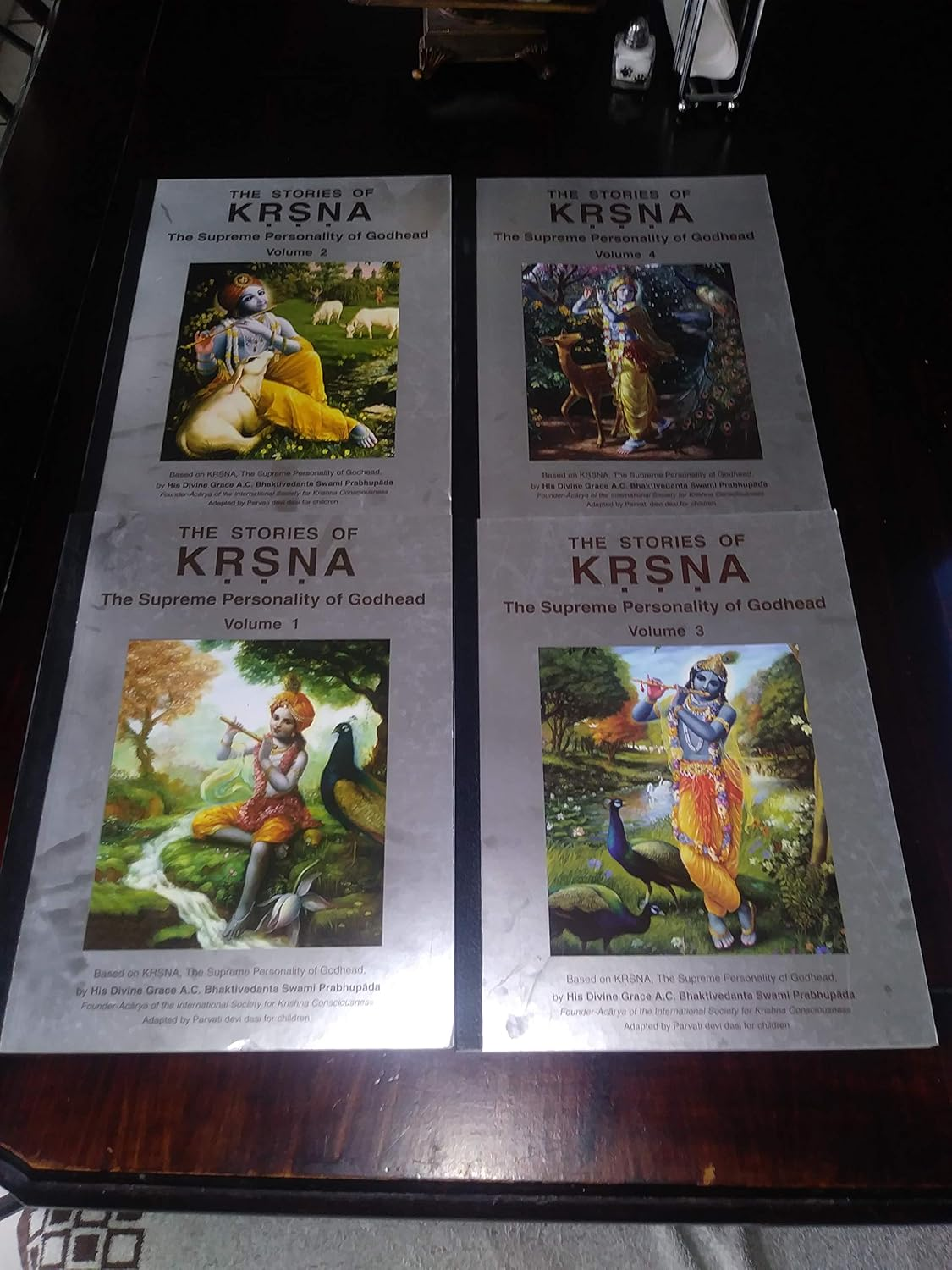

This story is part of our curated collection designed to help readers navigate emotional and life challenges through meaningful storytelling rooted in the timeless wisdom of Lord Jagannath.