
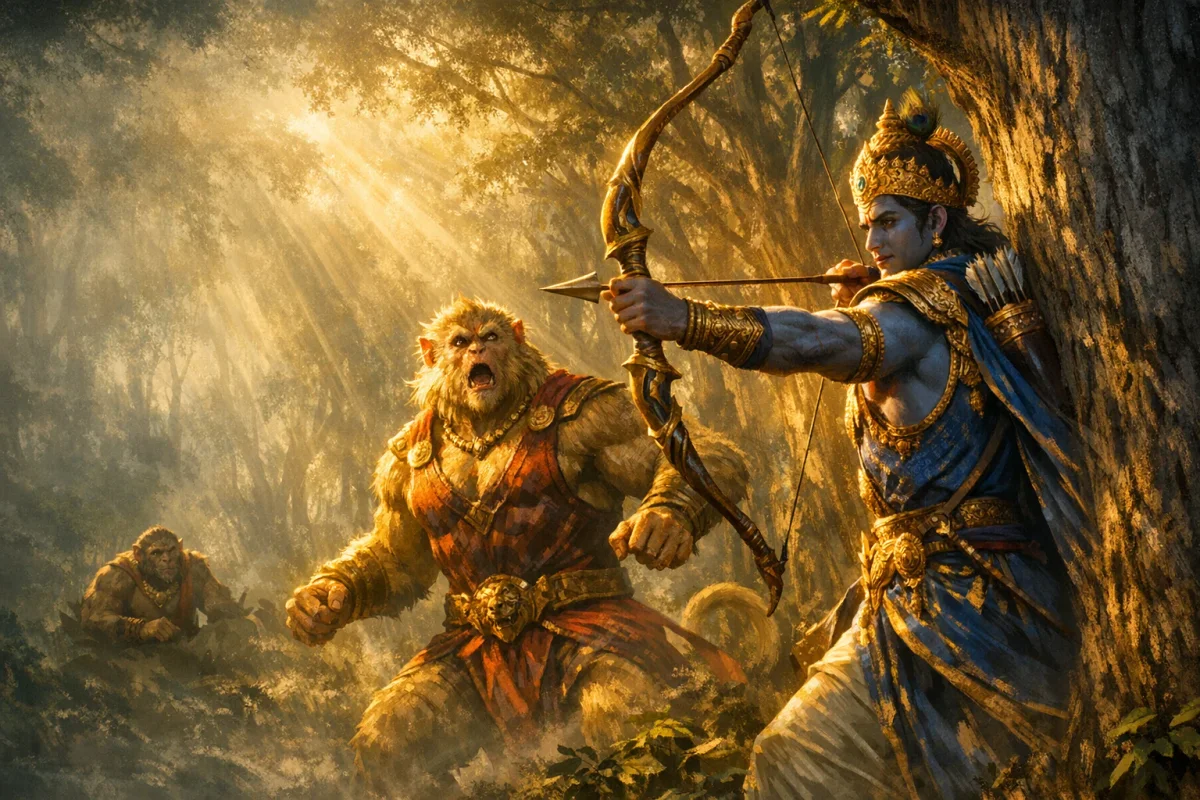
In the dense forests of Kishkindha, shadows play a timeless dance, concealing the fate of mighty warriors. The air is thick with tension, as the echoes of destiny reverberate through the trees. Amidst this verdant expanse, a tale unfolds—a story of brotherhood, betrayal, and the enigmatic path of dharma. The Srimad Bhagavatam recounts the events leading to a controversial justice, where alliances were tested and the very essence of right and wrong challenged.
The Story
In the dense forests of Kishkindha, shadows play a timeless dance, concealing the fate of mighty warriors. The air is thick with tension, as the echoes of destiny reverberate through the trees. Amidst this verdant expanse, a tale unfolds—a story of brotherhood, betrayal, and the enigmatic path of dharma. The Srimad Bhagavatam recounts the events leading to a controversial justice, where alliances were tested and the very essence of right and wrong challenged.
In the heart of Kishkindha, the jungle buzzed with the sound of battle. Vali, the powerful king of the Vanaras, stood fiercely against his brother Sugriva. Rama, the noble prince of Ayodhya, watched from his hidden vantage point. The sun cast its golden rays through the foliage, illuminating the sweat glistening on Vali's brow as his roars echoed through the forest.
The air was electric, charged with the clash of ideals and the scent of earth and foliage. The atmosphere was tense, each heartbeat echoing the pounding of war drums.
As the battle raged, Rama drew his bow, his heart weighed down by the task at hand. He knew his intervention was critical in restoring Sugriva to the throne. Yet, the act of striking from concealment troubled him. Sugriva, battered and weary, looked towards Rama, his eyes pleading for justice.
Rama wrestled with his conscience, torn between the promise of dharma and the moral ambiguity of his actions. He felt the burden of his role as protector and kingmaker, questioning the righteousness of his unseen arrow.
In a moment of divine insight, Rama's resolve was fortified. The forest seemed to whisper ancient truths, as if the spirit of dharma itself guided his hand. He released the arrow, a streak of light piercing through the shadows, finding its mark in Vali's heart.
The divine presence was palpable, as if the universe itself sanctioned the act, echoing the eternal balance of justice and duty.
With Vali's fall, the political landscape of Kishkindha shifted. Sugriva ascended the throne, his reign marking the end of tyranny and the beginning of a new era. Yet, the spiritual ramifications lingered, as Vali's soul departed with questions unanswered.
The act resonated through the corridors of time, challenging perceptions of justice and leadership. The cosmic scales of dharma were delicately recalibrated, ensuring the stability of the realm.
In the aftermath, Rama reflected on the complexity of his actions. He realized that the path of dharma is not always clear, and true justice requires both courage and contemplation.
Rama's soul was transformed, embracing the understanding that divine will operates in mysterious ways, often beyond human comprehension.
In today's world, the story of Vali's fall serves as a reminder of the nuanced nature of justice. The moral complexities faced by Rama echo in modern dilemmas, urging us to seek balance and fairness in our actions.
The path of dharma is intricate; justice and duty demand discernment. True leadership lies in balancing righteousness with compassion.
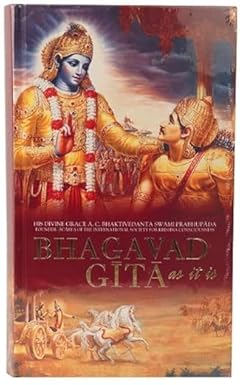
Bhagavad Gita Verse
2.47कर्मण्येवाधिकारस्ते मा फलेषु कदाचन। मा कर्मफलहेतुर्भूर्मा ते सङ्गोऽस्त्वकर्मणि
“Your right is only to work, but not to its results; do not let the results of action be your motive, nor let your attachment be to inaction.”
Moral of the Story
Justice may not always appear fair, but it serves a greater purpose in maintaining order and balance. Even when actions seem harsh, they can lead to a restoration of righteousness. The story of Vali reminds us that true strength lies in understanding the bigger picture of justice.
How to Apply This Story in Real Life
Evaluate situations from multiple perspectives before making judgments.
Recognize that actions taken for justice may not always be easy or popular.
Cultivate empathy and understanding in dealing with conflicts in our lives.
Why This Story Matters
This story highlights the complexities of justice and morality, encouraging us to reflect on our own decisions and their consequences. In a world where we often face moral dilemmas, Vali's tale serves as a reminder that sometimes difficult choices are necessary for the greater good, resonating with contemporary issues of fairness and ethical leadership.
Frequently Asked Questions (FAQs)
Vali's fall represents the complexities of justice and the necessity of making tough decisions for the greater good.
It challenges us to think deeply about our moral choices and the implications they carry in today's society.
We can learn to approach conflicts with a broader perspective and to understand that sometimes justice requires difficult sacrifices.

Suggested Books & Puja Items

This story is part of our curated collection designed to help readers navigate emotional and life challenges through meaningful storytelling rooted in the timeless wisdom of Lord Jagannath.