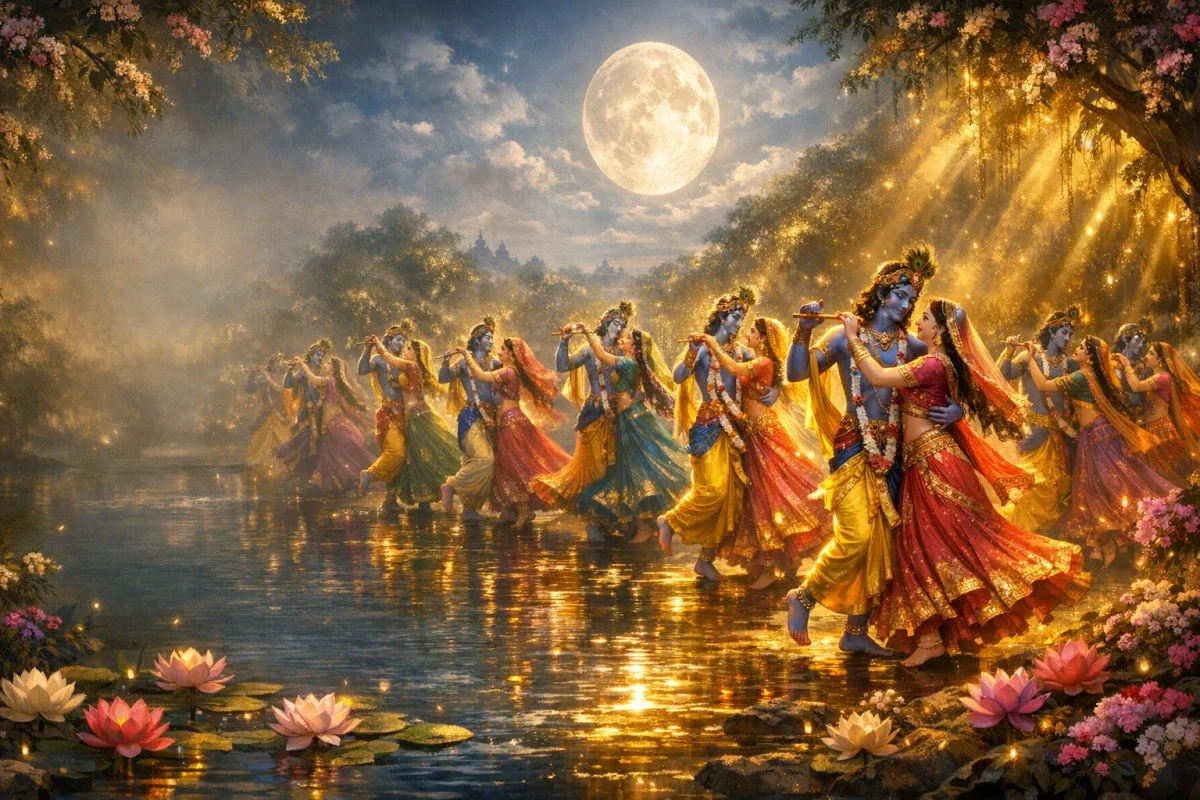
On a serene, moonlit night in the sacred groves of Vrindavan, where the Yamuna river whispered secrets to the gentle breeze, a divine event was about to unfold that would transcend the boundaries of time and space. This was no ordinary night. The air was thick with anticipation and the soothing aroma of jasmine. The gopis of Vrindavan, their hearts brimming with love and devotion, were drawn irresistibly to the forest, where Lord Krishna awaited to reveal the most profound mystery of divine love—the Rasa Lila. As told in the Srimad Bhagavatam, this ethereal dance was a celestial manifestation of the eternal bond between the soul and the divine.
The Story
On a serene, moonlit night in the sacred groves of Vrindavan, where the Yamuna river whispered secrets to the gentle breeze, a divine event was about to unfold that would transcend the boundaries of time and space. This was no ordinary night. The air was thick with anticipation and the soothing aroma of jasmine. The gopis of Vrindavan, their hearts brimming with love and devotion, were drawn irresistibly to the forest, where Lord Krishna awaited to reveal the most profound mystery of divine love—the Rasa Lila. As told in the Srimad Bhagavatam, this ethereal dance was a celestial manifestation of the eternal bond between the soul and the divine.
The moon shone brightly over Vrindavan, casting a silvery glow upon the forest floor. The gopis, adorned in their finest garments, made their way to the clearing, where Krishna, with His enchanting smile, stood in the center. In a miraculous display, Krishna multiplied Himself, ensuring that each gopi felt His undivided attention and love. The Rasa Lila commenced, with Krishna and the gopis moving in perfect harmony, their movements a symphony of divine love. The air was filled with the sweet melodies of Krishna's flute, and the forest seemed to come alive, swaying to the rhythm of this celestial dance.
The forest was alive with the fragrance of blooming flowers, the gentle rustling of leaves, and the soft murmurs of the Yamuna. The atmosphere was charged with divine energy, as if the very universe paused to witness this sacred event.
As the dance progressed, an internal struggle began to surface within the gopis. Despite the overwhelming joy, a shadow of doubt crept into their hearts. Each gopi, while dancing with Krishna, wondered if she was truly the most beloved. This subtle conflict threatened to disrupt the harmony of the Rasa Lila. Yet, the gopis' devotion was unwavering, and their love for Krishna transcended any earthly desire for exclusivity.
The gopis grappled with their desire for Krishna's singular attention, a reflection of the human yearning for personal connection with the divine. However, in their hearts, they knew that Krishna's love was beyond worldly attachment, infinite and all-encompassing.
Sensing the gopis' inner turmoil, Krishna, in His divine wisdom, paused the dance. He gently reminded them through His silent, loving presence that true love is beyond possession and attachment. In a moment of divine clarity, the gopis realized the oneness of their souls with Krishna, transcending their individual identities.
Krishna's divine intervention was subtle yet profound—a silent reassurance that His love was omnipresent, a boundless ocean in which all souls were immersed.
The realization brought a deep sense of peace and fulfillment to the gopis. The Rasa Lila resumed with renewed vigor, no longer bound by individual desires. This divine dance symbolized the ultimate union of the soul with the divine, a theme that resonated far beyond the boundaries of Vrindavan.
Spiritually, the Rasa Lila reinforced the concept of divine love as a path to liberation. Politically, it solidified Krishna's role as the divine protector and beloved of Vrindavan, uniting the community in shared devotion.
As the Rasa Lila reached its zenith, the gopis experienced a profound transformation. They realized that their individuality dissolved in the presence of Krishna, embodying the truth that they were part of a greater cosmic dance of love.
This transformation was a testament to the power of divine love to transcend human limitations, fostering unity and spiritual enlightenment.
The Rasa Lila's timeless message of love and unity remains relevant today, inspiring individuals to seek a deeper connection with the divine. In a world often divided by desires and attachments, the story encourages us to transcend our differences and embrace the universal bond of love.
True love transcends possession. It is an eternal bond that unites all souls with the divine. In surrendering to this love, we find unity and peace.
Bhagavad Gita Verse
2.13देहिनोऽस्मिन्यथा देहे कौमारं यौवनं जरा। तथा देहान्तरप्राप्तिर्धीरस्तत्र न मुह्यति
“Just as the embodied soul passes through childhood, youth, and old age in this body, so too does it pass into another body; the steadfast one does not grieve over this.”
Moral of the Story
The Rasa Lila teaches us that love is a divine force that transcends all boundaries and unites souls. It emphasizes the importance of devotion, the joy of collective worship, and the beauty of surrendering to the divine will. Through the dance of love, we learn to embrace our spiritual essence and nurture our connection with the divine.
How to Apply This Story in Real Life
Embrace community activities that foster connection and love among individuals.
Practice mindfulness and devotion in daily life to strengthen your spiritual connection.
Engage in creative expressions, such as dance or music, that celebrate love and unity.
Why This Story Matters
In today's fast-paced world, where individualism often overshadows community spirit, the themes of the Rasa Lila remind us of the profound importance of love, connection, and unity. It encourages us to cultivate relationships based on mutual respect and devotion, providing a much-needed antidote to feelings of isolation and disconnection prevalent in modern life.
Frequently Asked Questions (FAQs)
The Rasa Lila represents the divine play and love of Lord Krishna with his devotees, symbolizing the eternal bond between the divine and the human heart.
You can apply its lessons by nurturing relationships filled with love, engaging in community service, and embracing spiritual practices that promote inner peace and devotion.
Yes, the Rasa Lila is celebrated during festivals like Janmashtami, where devotees reenact the divine dance of Lord Krishna and his beloved gopis.

Suggested Books & Puja Items
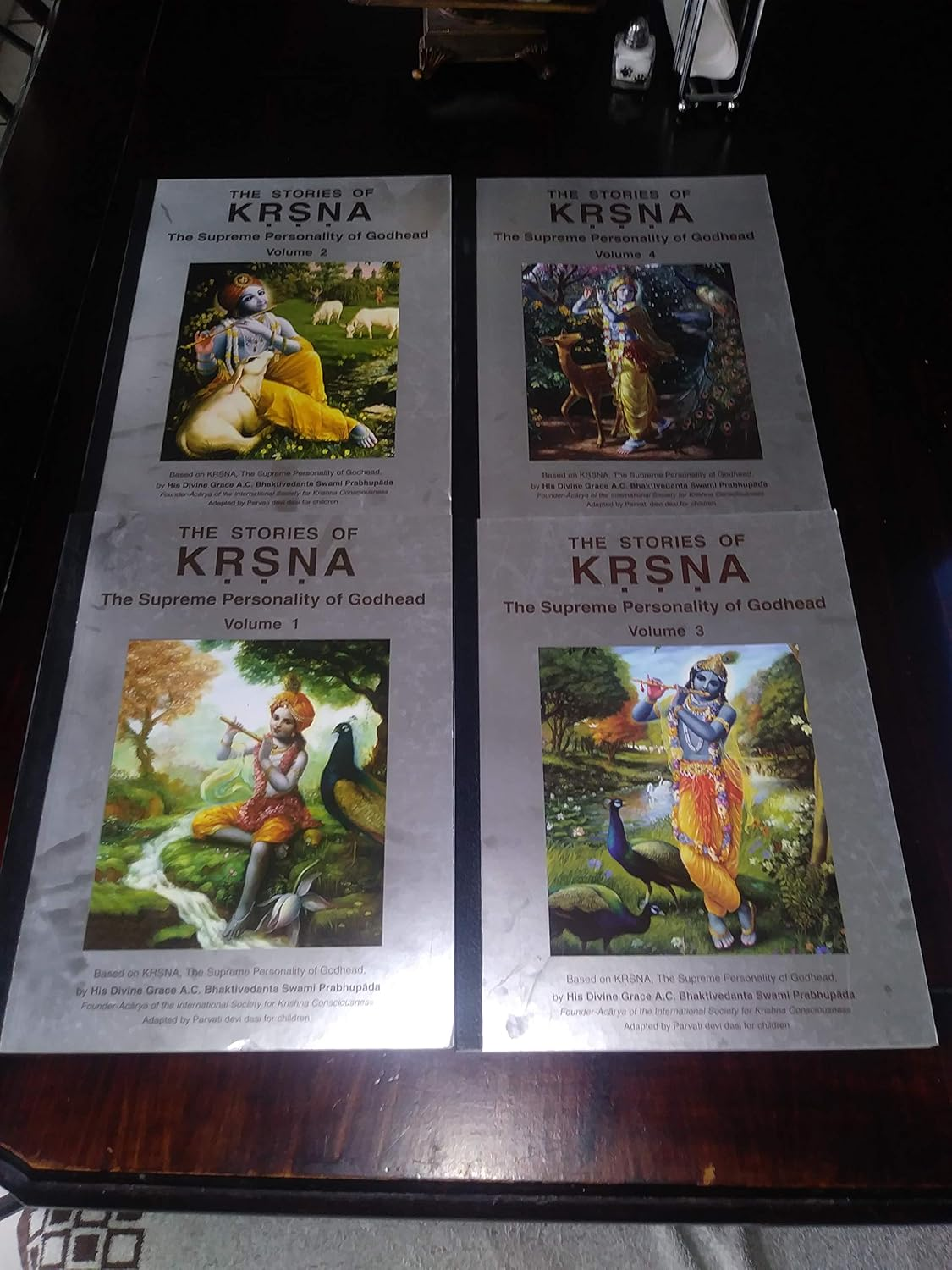
This story is part of our curated collection designed to help readers navigate emotional and life challenges through meaningful storytelling rooted in the timeless wisdom of Lord Jagannath.